










Introduction
Staying informed used to mean reading a newspaper in the morning or watching a scheduled news bulletin. Today, information follows people throughout the day.
A smartphone notification can introduce a breaking story. A search engine can answer a question within seconds. A social media post can turn a developing event into a global conversation. At the same time, longer articles and explainers can provide the context that a short update cannot.
This evolution has created a much larger digital information environment.
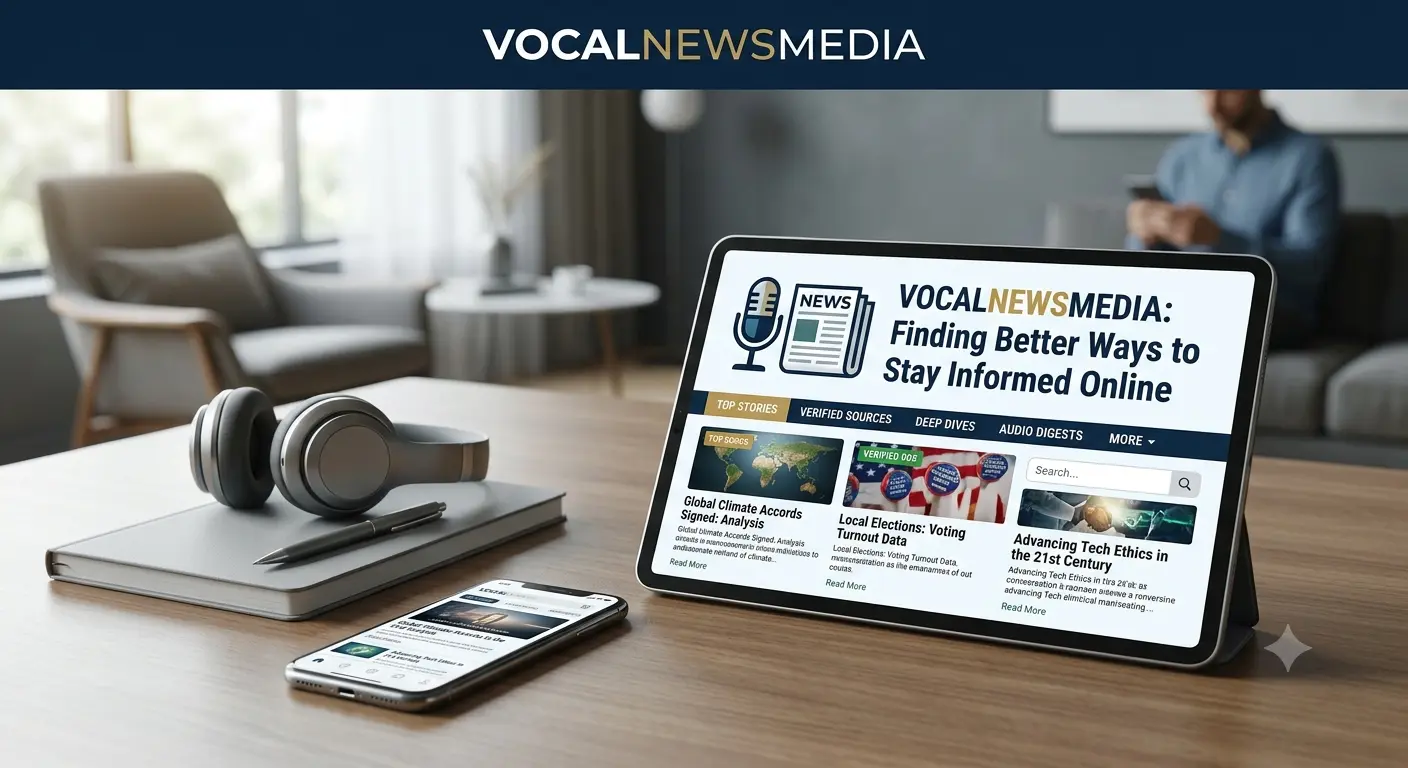
VocalNewsMedia fits into this world of online publishing, where readers can explore news, trends, technology, business, lifestyle, entertainment, and other subjects through digital content.
However, having more information doesn’t necessarily mean being better informed. Readers need to know how to find relevant stories, evaluate information, understand context, and avoid being overwhelmed by the constant flow of updates.
What Is VocalNewsMedia?
VocalNewsMedia can be viewed as an online media and publishing platform focused on digital stories, news, trends, and informative content.
A broad digital publication can bring together subjects such as:
- Technology
- Artificial intelligence
- Business
- Finance
- Lifestyle
- Education
- Entertainment
- Travel
- Sports
- World events
- Online trends
This variety allows readers with different interests to explore information in one digital environment.
The broader value of a platform like this lies in making information accessible while helping readers discover topics they may not have actively searched for.
How People Stay Informed Has Changed
The modern information journey can happen in several ways.
A reader may:
- See a headline on social media.
- Search for more information.
- Read an article.
- Watch a video explanation.
- Compare different sources.
- Discuss the story with others.
- Return later for updates.
The process is no longer linear.
People move between platforms depending on what they want to know.
1. Information Is Available Around the Clock
Digital publishing doesn’t operate according to a single daily news cycle.
New stories can appear at any time.
This provides convenience, but it also creates a challenge: information overload.
Readers need to distinguish between:
- Important updates
- Interesting stories
- Background information
- Opinions
- Promotional content
- Repeated coverage
Not every notification deserves immediate attention.
2. Search Helps Readers Find Specific Answers
People often turn to search engines when they have a particular question.
Examples include:
- What happened?
- Why is this important?
- What does this term mean?
- How does this technology work?
- What changed recently?
This makes explanatory content particularly valuable.
A good digital article doesn’t simply repeat an announcement. It helps the reader understand it.
3. News and Explainers Serve Different Needs
A breaking-news article may focus on what has happened.
An explainer can answer:
- Why did it happen?
- What caused it?
- Who is affected?
- What does it mean?
- What should readers know next?
Both formats have value.
Together, they provide a more complete information experience.
VocalNewsMedia and Technology Coverage
Technology is one of the fastest-changing areas of digital publishing.
4. AI Has Become Part of Everyday Conversations
Artificial intelligence now appears in discussions about:
- Work
- Education
- Software
- Business
- Marketing
- Entertainment
- Search
- Productivity
As AI becomes more common, readers need content that explains both developments and practical applications.
A headline announcing a new AI product is useful.
An article explaining what it does, who can use it, and why it matters can be even more useful.
5. Technology Readers Need Practical Context
Technology coverage becomes stronger when it answers simple questions:
What changed?
Describe the development.
Why does it matter?
Explain the significance.
Who is affected?
Identify relevant audiences.
What happens next?
Discuss possible developments without presenting speculation as fact.
This structure helps readers understand technology without requiring specialist knowledge.
6. Evergreen Technology Guides Have Long-Term Value
Technology isn’t only about breaking news.
People repeatedly search for:
- Definitions
- Tutorials
- Beginner guides
- Software explanations
- Digital safety advice
- How-to instructions
These topics can remain useful for much longer than a single news update.
VocalNewsMedia and Business Information
Business stories can influence companies, workers, consumers, and entrepreneurs.
7. Business Content Should Explain the Impact
Instead of simply reporting that something happened, useful business content can explain what it could mean.
For example:
A new technology launch
could lead to questions about:
- Competition
- Customer experience
- Productivity
- Costs
- Industry changes
Readers benefit when the article connects developments to real-world implications.
8. Make Business Content Accessible
Business terminology can sometimes make articles difficult for general audiences.
Whenever possible:
- Explain specialized terms.
- Use practical examples.
- Avoid unnecessary jargon.
- Define acronyms.
- Break complicated concepts into sections.
Good business journalism doesn’t require readers to have an MBA.
VocalNewsMedia and Lifestyle Stories
Digital readers also use online publications for everyday interests.
9. Lifestyle Content Can Be Informative and Practical
Lifestyle stories can explore:
- Home ideas
- Travel
- Food
- Entertainment
- Personal interests
- Daily routines
- Consumer trends
These subjects can complement traditional news by addressing everyday life.
10. Useful Guides Encourage Readers to Return
Evergreen lifestyle content can answer questions people repeatedly have.
Examples include:
- How-to guides
- Checklists
- Planning ideas
- Beginner resources
- Practical tips
- Comparisons
When content solves a recurring problem, its value can extend beyond the day it is published.
VocalNewsMedia and Responsible News Consumption
Digital information requires active participation from readers.
11. Don’t Stop at the Headline
Headlines provide a quick introduction.
But important information may appear later in the article.
Before sharing a significant story, check:
- The complete article
- Publication date
- Sources
- Supporting information
- Relevant context
A few extra minutes can prevent misunderstandings.
12. Check When the Story Was Published
Old stories can sometimes resurface on social media and appear new.
Always check the date.
This is especially important for:
- Technology
- Finance
- Travel
- Business
- Current affairs
- Product information
13. Verify Important Claims
For significant claims, look for supporting evidence.
Useful sources may include:
- Official organizations
- Government websites
- Company announcements
- Original research
- Reputable publications
- Primary documents
The importance of verification increases when the subject could influence important decisions.
14. Compare Different Perspectives
Two reputable sources may report the same event differently because they focus on different aspects.
Comparing sources can reveal:
- Additional details
- Different perspectives
- Corrections
- Areas of uncertainty
- Broader context
This is more useful than assuming the first result you see is the complete story.
Understanding Different Types of Online Content
Digital publications contain many formats.
News
Focuses on reporting an event.
Analysis
Explores meaning and implications.
Opinion
Expresses a viewpoint.
Guide
Provides practical instructions.
Review
Evaluates a product, service, or experience.
Commentary
Provides interpretation or discussion.
Knowing the format helps readers understand what they are consuming.
VocalNewsMedia and Social Media Discovery
Social platforms have become important gateways to digital stories.
15. Social Media Can Introduce Stories Quickly
People may encounter news through:
- Posts
- Videos
- Shares
- Recommendations
- Trending topics
- Online discussions
This can help important stories reach audiences quickly.
But fast distribution also means readers should verify important claims.
16. Engagement Doesn’t Equal Accuracy
A story with thousands of shares isn’t necessarily more accurate than a story with fewer views.
Social engagement measures attention.
It does not automatically measure reliability.
Readers should ask:
Is this popular because it is useful, or simply because it is surprising?
17. Social Discussions Add Another Layer
Online conversations can provide:
- Personal experiences
- Questions
- Alternative perspectives
- Additional resources
But user-generated comments should also be evaluated carefully.
Personal experiences aren’t always representative of broader facts.
VocalNewsMedia and Mobile-First Reading
Smartphones have made digital information highly accessible.
People can read articles while:
- Traveling
- Commuting
- Waiting
- Taking breaks
- Relaxing at home
This has changed how articles should be presented.
18. Make Articles Comfortable on Small Screens
Mobile-friendly content should have:
- Short paragraphs
- Clear headings
- Readable typography
- Responsive images
- Simple navigation
- Easy-to-find answers
Good formatting reduces the effort required to consume information.
19. Use Scannable Structures
A reader should be able to quickly understand the article’s organization.
Useful elements include:
- H2 headings
- H3 subheadings
- Bullet lists
- Numbered steps
- Tables
- FAQ sections
- Summary paragraphs
Structure isn’t decoration.
It is part of usability.
VocalNewsMedia and Search-Friendly Content
Search engines connect people with information.
20. Understand Search Intent
Different searches require different content.
For example:
“What is AI?”
needs an explanation.
“AI trends 2026”
requires current information.
“How to use an AI writing tool”
calls for a practical guide.
Understanding the intent behind the query helps determine the appropriate article structure.
21. Answer Questions Directly
For question-based searches, avoid unnecessary delays.
A useful structure is:
Direct answer → Explanation → Examples → Related questions
This makes content useful for both readers and search-driven discovery.
22. Build Topic Depth
One article rarely answers every question about a subject.
A publication can create connected resources.
For example:
AI
- What is AI?
- How does generative AI work?
- AI tools for beginners
- AI in business
- AI and productivity
Related content allows readers to continue learning.
VocalNewsMedia and Evergreen Publishing
Not every article needs to disappear from relevance after a few days.
23. What Makes Content Evergreen?
Evergreen articles address recurring information needs.
Examples include:
- Definitions
- Tutorials
- Beginner guides
- How-to articles
- Educational explainers
- Checklists
These articles can continue attracting readers when maintained properly.
24. Combine Current and Evergreen Content
A strong publishing strategy can include both.
Current Content
Provides timely information.
Evergreen Content
Provides long-term reference value.
The two can support each other.
A current story can link to an evergreen explainer, while the explainer can point readers toward newer developments.
Building a Reliable Digital Information Routine
Readers can create their own system for staying informed.
25. Choose a Few Reliable Sources
You don’t need to follow hundreds of websites.
Select a manageable group of sources covering the subjects that matter to you.
26. Set Specific Times for News
Constantly checking updates can become distracting.
Instead, consider checking news at planned times.
For example:
- Morning overview
- Afternoon update
- Evening review
This keeps you informed without allowing notifications to dominate the day.
27. Follow Topics, Not Just Headlines
Instead of reacting to individual stories, understand broader themes.
For example, with AI, follow:
- Major developments
- Practical applications
- Regulation
- Business adoption
- New tools
This creates deeper understanding.
28. Save Important Resources
If an article provides valuable information, save it.
This is particularly useful for:
- Guides
- Tutorials
- Reference articles
- Explanations
- Research
The goal isn’t to consume information once.
It’s to build a useful personal knowledge base.
A Practical Workflow for Digital Publishers
Creating useful digital content can follow a repeatable process.
Step 1: Identify the Audience
Know who you’re trying to help.
Step 2: Find a Relevant Topic
Choose something people genuinely care about.
Step 3: Research the Subject
Use reliable sources.
Step 4: Identify Search Intent
Understand what the audience wants to know.
Step 5: Create an Outline
Organize the information logically.
Step 6: Write the Main Answer
Give readers useful information early.
Step 7: Add Context
Explain why the subject matters.
Step 8: Review for Accuracy
Check dates, facts, claims, and terminology.
Step 9: Optimize the Page
Improve headings, metadata, internal links, and readability.
Step 10: Monitor Performance
Use audience data to improve future content.
Content Metrics That Matter
Different goals require different measurements.
| Metric | Purpose |
|---|---|
| Organic visits | Search discovery |
| Page views | Overall exposure |
| Engagement time | Reader attention |
| Shares | Perceived usefulness |
| Comments | Audience interaction |
| Returning users | Repeat interest |
| Conversions | Desired outcomes |
Traffic alone doesn’t tell the entire story.
Common Digital News Mistakes
Treating every update as equally important
Constant updates can make it difficult to identify what actually matters.
Sharing before reading
This can spread incomplete or misleading information.
Ignoring dates
Old information may be mistaken for new information.
Using one source for everything
Different sources can provide valuable context.
Confusing opinion with reporting
Always consider what type of content you’re reading.
Common Publishing Mistakes
Writing for algorithms instead of people
Search optimization should improve discoverability without sacrificing readability.
Overusing sensational headlines
Trust is difficult to rebuild after repeated disappointment.
Publishing without verification
Accuracy is fundamental to responsible publishing.
Ignoring mobile readers
Many people access information through smartphones.
Forgetting to update evergreen content
Outdated guides can become misleading.
10 Principles for Better Digital Information
- Read beyond headlines.
- Check publication dates.
- Verify important claims.
- Compare multiple reliable sources.
- Understand whether content is news or opinion.
- Look for context.
- Avoid unnecessary information overload.
- Use search intentionally.
- Save useful evergreen resources.
- Build a balanced information routine.
Frequently Asked Questions
What is VocalNewsMedia?
VocalNewsMedia can be understood as an online media and publishing platform focused on digital stories, news, trends, and informative content across multiple subjects.
What subjects can digital news platforms cover?
Digital publications can cover technology, AI, business, finance, lifestyle, education, entertainment, travel, sports, world events, and many other areas.
How can readers avoid misinformation?
Read beyond headlines, check dates, examine supporting evidence, compare important claims with reliable sources, and avoid sharing information before verifying it.
Why is context important in digital news?
Context explains why an event matters, what caused it, who may be affected, and how it connects to broader developments.
What is evergreen digital content?
Evergreen content answers questions that remain relevant over time, such as definitions, tutorials, guides, and educational explainers.
How can someone stay informed without feeling overwhelmed?
Choose a manageable number of reliable sources, set specific times to check updates, mute unnecessary notifications, and focus on topics that genuinely matter to you.
Conclusion
VocalNewsMedia reflects a digital world where information is faster, broader, and more accessible than ever.
That convenience is valuable, but it also creates a responsibility for both publishers and readers.
Publishers need to create accurate, useful, well-structured stories.
Readers need to evaluate what they see, look beyond headlines, check dates, compare sources, and understand context.
The future of digital news will continue to evolve alongside search engines, social platforms, mobile devices, video, and artificial intelligence.
But the fundamental purpose of good media remains unchanged:
Help people understand what is happening and why it matters.
When digital stories combine accuracy, clarity, context, and relevance, they become more than another update in a crowded feed. They become useful resources that help people make sense of the world around them.